Sports fans
Who
Already follow the sport.
Want
The moment as it happens, in the language of their league. Not a generic highlight.
On the card
Sport-specific language on the front.
Designed HEED’s mobile app and built the Cinema 4D motion for in-game moment templates: stories fans could follow across UFC, Chelsea, Bundesliga, EuroLeague, and Professional Bull Riders.
I was a product designer at HEED, working on the mobile app. The job was to take live sports (fights, matches, rides) and turn what happened in the game into something a fan could actually follow. That meant redesigning the app, building templates for in-game moments, and making the motion myself in Cinema 4D: the lifecycles that play when a moment hits the screen.
We were a startup with real league and team partners, not a single sport to design for. UFC, Chelsea, Bundesliga, EuroLeague basketball, Professional Bull Riders. Each one had its own brand, its own language, and its own idea of what counted as a moment. A knockout is not a goal is not an eight-second ride.
We couldn't custom-build every asset from scratch, and we couldn't ship one generic template that made every partner look the same. The work was being creative inside that constraint: a system of templates flexible enough to feel native to each sport, and fast enough for a small team to actually ship.
I focused on the mobile app redesign and the motion. The center of that work was moment templates: reusable patterns for the events that happen in a game. Instead of designing a one-off for every league, we built a structure we could restory: same bones, different narrative, so a UFC moment and a Chelsea moment could feel like they belonged to that sport without starting over each time.
I also built the motion assets in Cinema 4D. The templates weren't static comps. Each one had a lifecycle. How it lands, how the score hits, how it exits. Design and motion were the same job.
The app had to hold three kinds of people at once. One card, three jobs.
Who
Already follow the sport.
Want
The moment as it happens, in the language of their league. Not a generic highlight.
On the card
Sport-specific language on the front.
Who
Don't know the rules cold.
Want
The story of what just happened, and why it mattered, without needing to be an expert.
On the card
A headline and a reason. Readable in one glance.
Who
Want to keep the plays that matter.
Want
Something you'd save, not only watch and forget.
On the card
The back of the card. Keep it. Talk on it.
| Attribute | Sports fans | Casual fans | Collectors |
|---|---|---|---|
| Who | Already follow the sport. | Don't know the rules cold. | Want to keep the plays that matter. |
| Want | The moment as it happens, in the language of their league. Not a generic highlight. | The story of what just happened, and why it mattered, without needing to be an expert. | Something you'd save, not only watch and forget. |
| On the card | Sport-specific language on the front. | A headline and a reason. Readable in one glance. | The back of the card. Keep it. Talk on it. |
Partners we designed around: UFC, Chelsea, Bundesliga, EuroLeague, and PBR.
The moment was the unit of the product. Not a highlight reel, not a stat dump. A card you could hold.
On the front: the story of the play. A headline, the player, the minute. Three ways in from there. HEED Score was an algorithm that ranked the moment in context: how rare it was, how late, how much it changed the game. So a 71 meant something different than a box-score 1–1. Analytics opened the same play as data. Replay was the footage.
Flip it and the back was social. Reactions, comments, photos, audio. Collectors keep the moment. Everyone else talks on it.
Same template, restoryed per league. Chelsea blue is not UFC red. The bones stay. The narrative changes.
Tap through the three entry points and the back. This is the Hazard thunderbolt, 85th minute, Chelsea.
Contextual ranking of the moment, not a box score. The algorithm weighed how rare, late, and decisive the play was. This one: Hazard, 85th minute, 71.
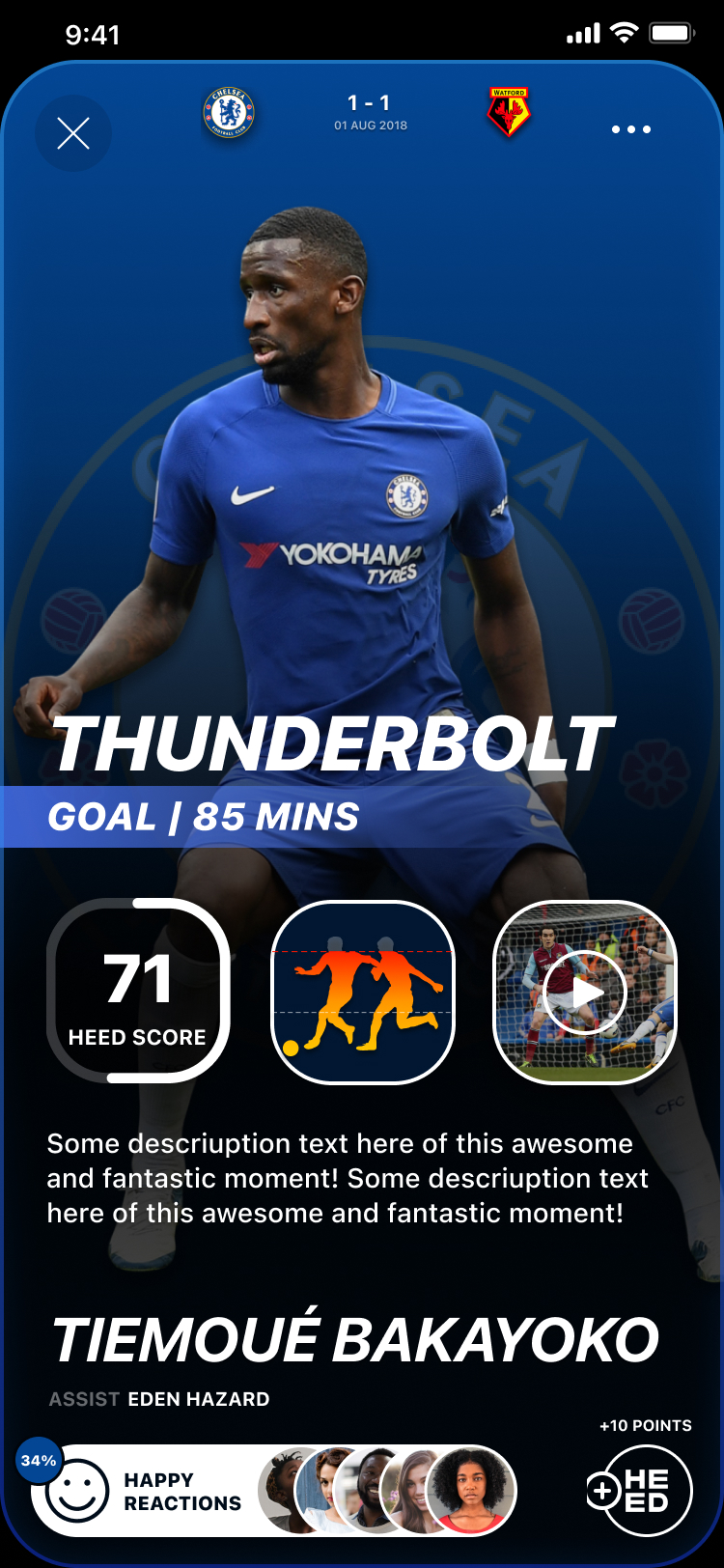
An algorithmic ranking of the moment, not a highlight editor's opinion. Context: who, when, how much the game shifted. The number sat on the front of the card so you could feel the size of the play before you watched it.
The play as numbers. Passes in the move, attacker efficiency against average, game pace, distance travelled, where the shot went. Same moment, different language, for the fan who wants to know *why* it was a 71. Open Analytics on the card above.
The footage. Watch it happen, then go back to the score or the data without leaving the card. The motion on these cards was built in Cinema 4D, not a stock wipe.
The social layer lived on the reverse. Text, emoji, photos, voice notes. You didn't leave the moment to talk about it. You flipped it. Open Reactions on the card above.
The app around the card. Scroll inside the phone. This is a full feed, not a crop. Switch to Chelsea to see the same system restoryed in club language.
Home feed. Mixed sports in one scroll (Chelsea, UFC, EuroLeague) with trending moments, live matches, polls, and reactions.

I designed the templates and made the motion in Cinema 4D. Same lifecycle, different energy depending on the sport and the play: a celebration, a break, a flag. These are those assets, on a phone.
And here is the same template landed across five different sports. A knockout, a counter, the pulse of a match, a run out, a goal in the 90th. The bones are identical every time: a headline for what happened, the HEED Score, the stat that proves it, the reaction bar along the bottom. What changes is the photography, the palette, and the language of the sport.
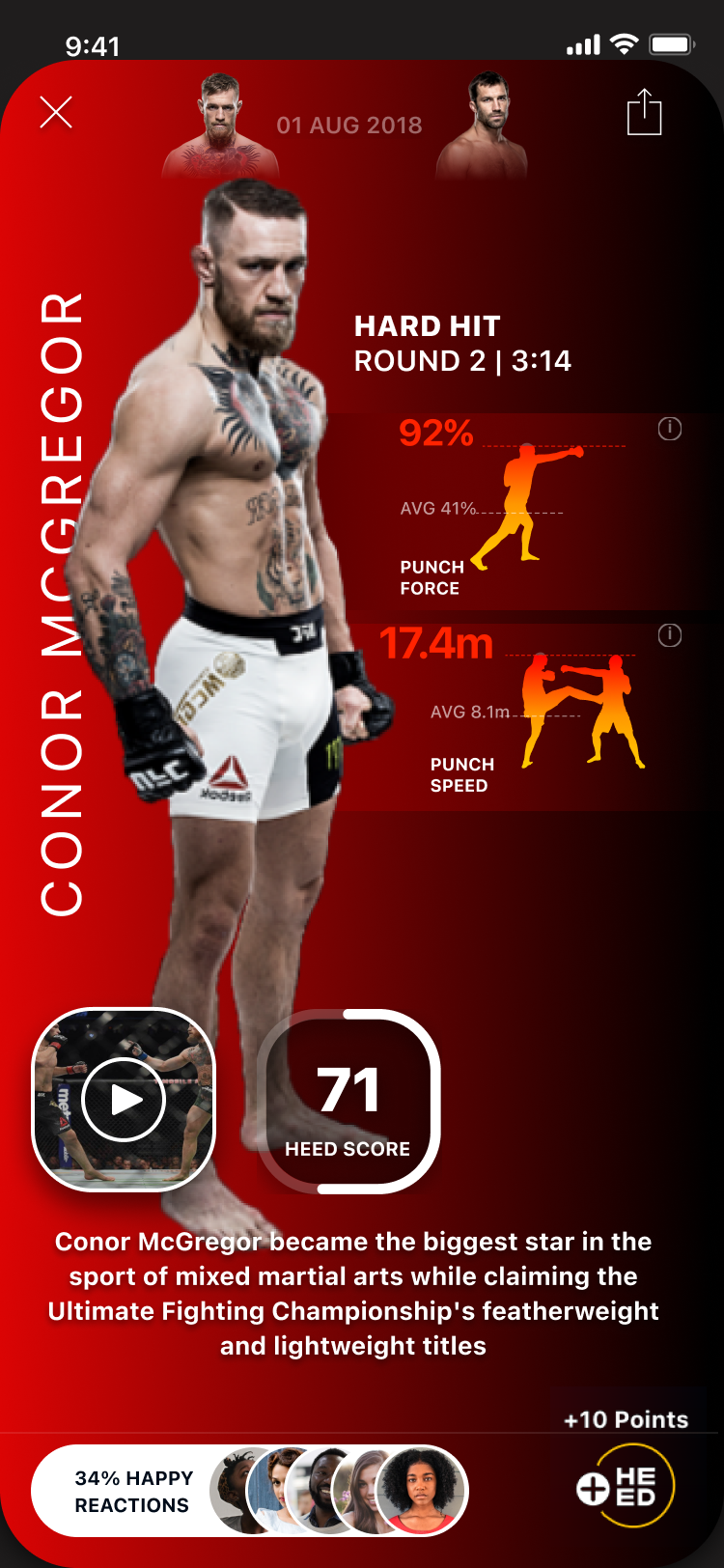
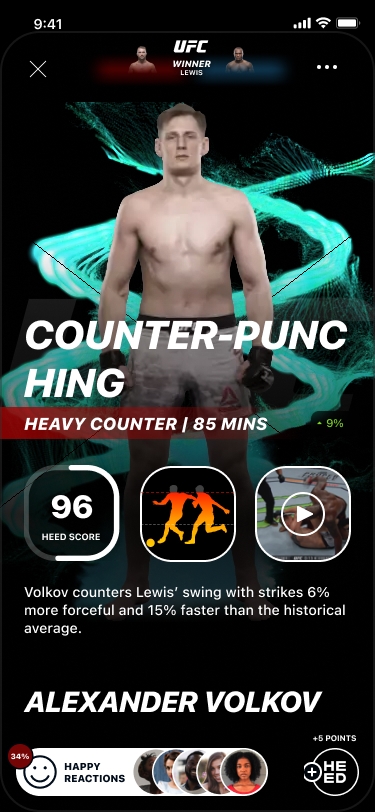
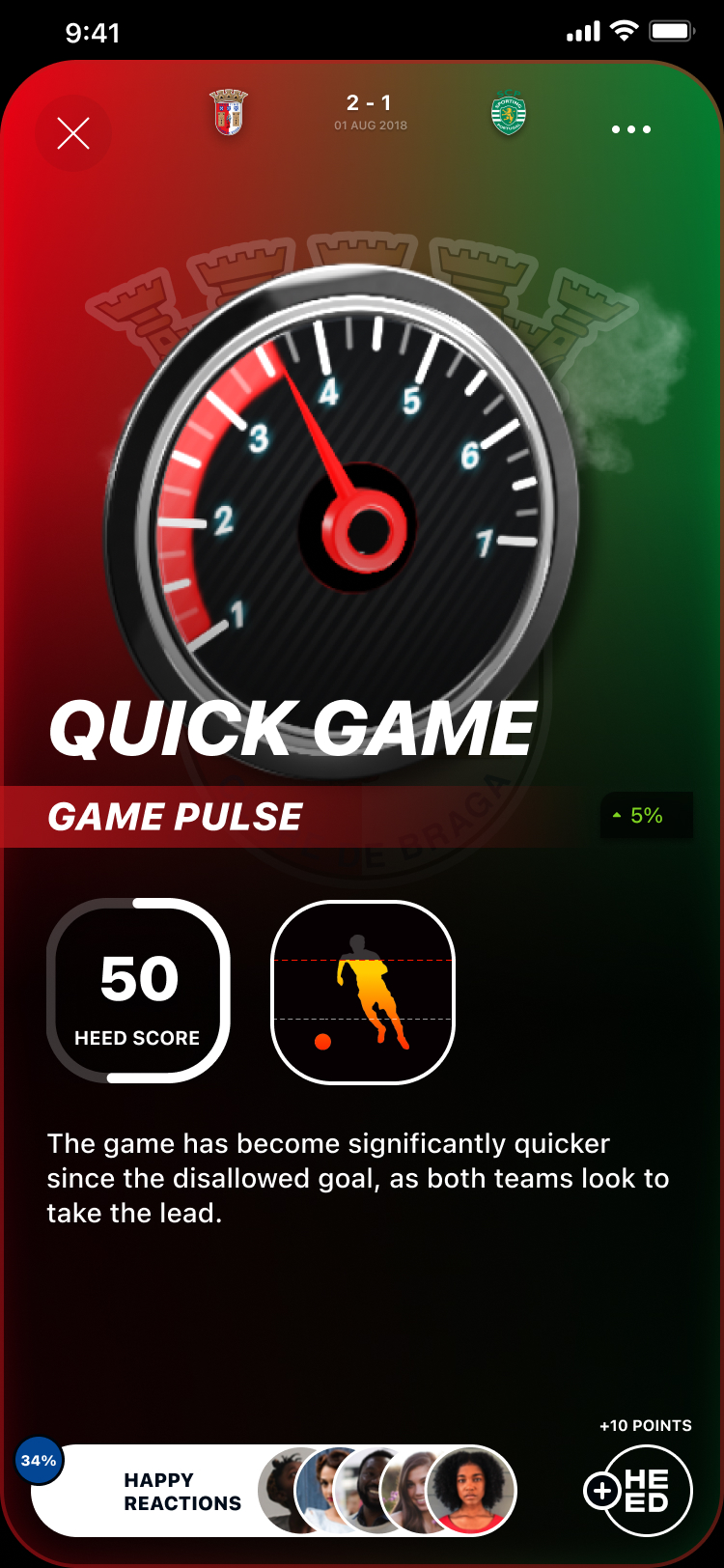
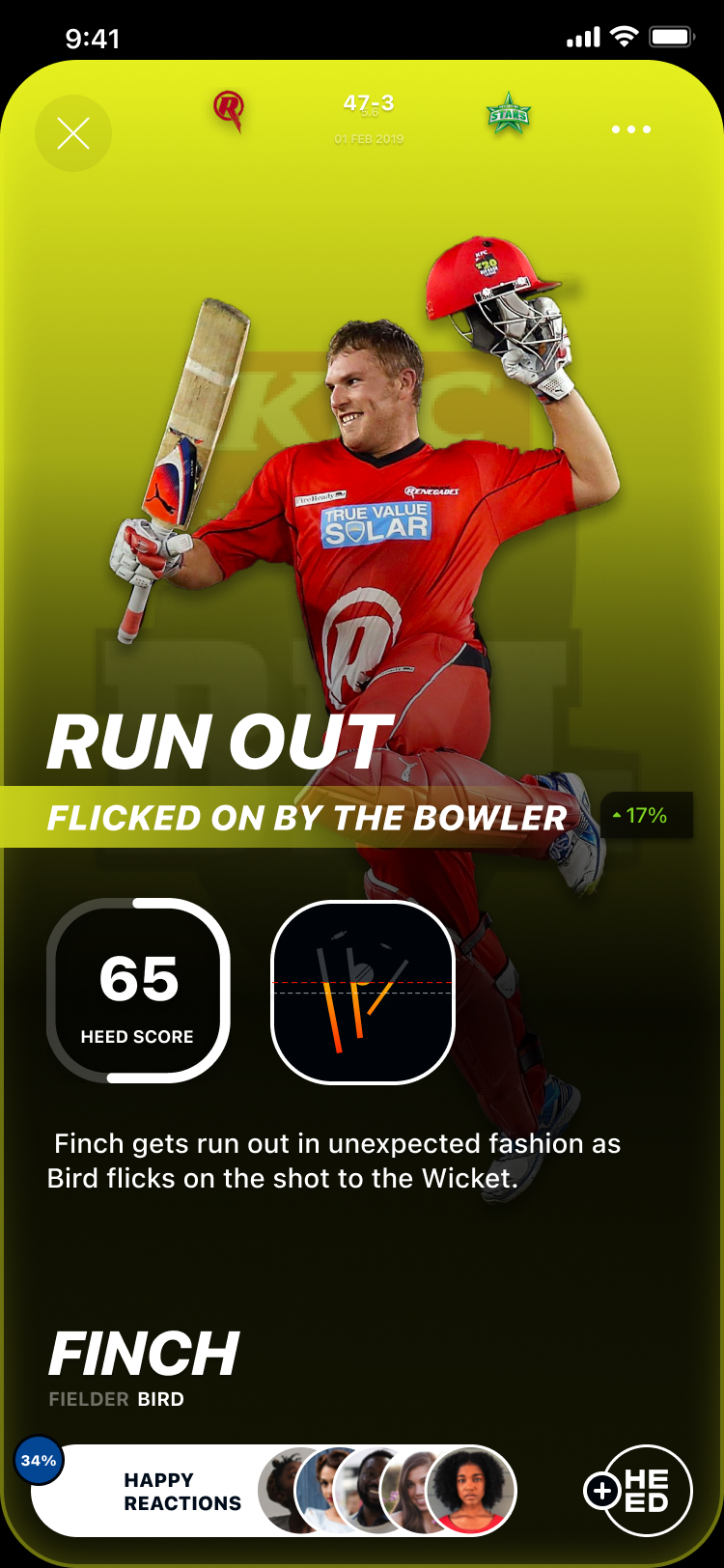
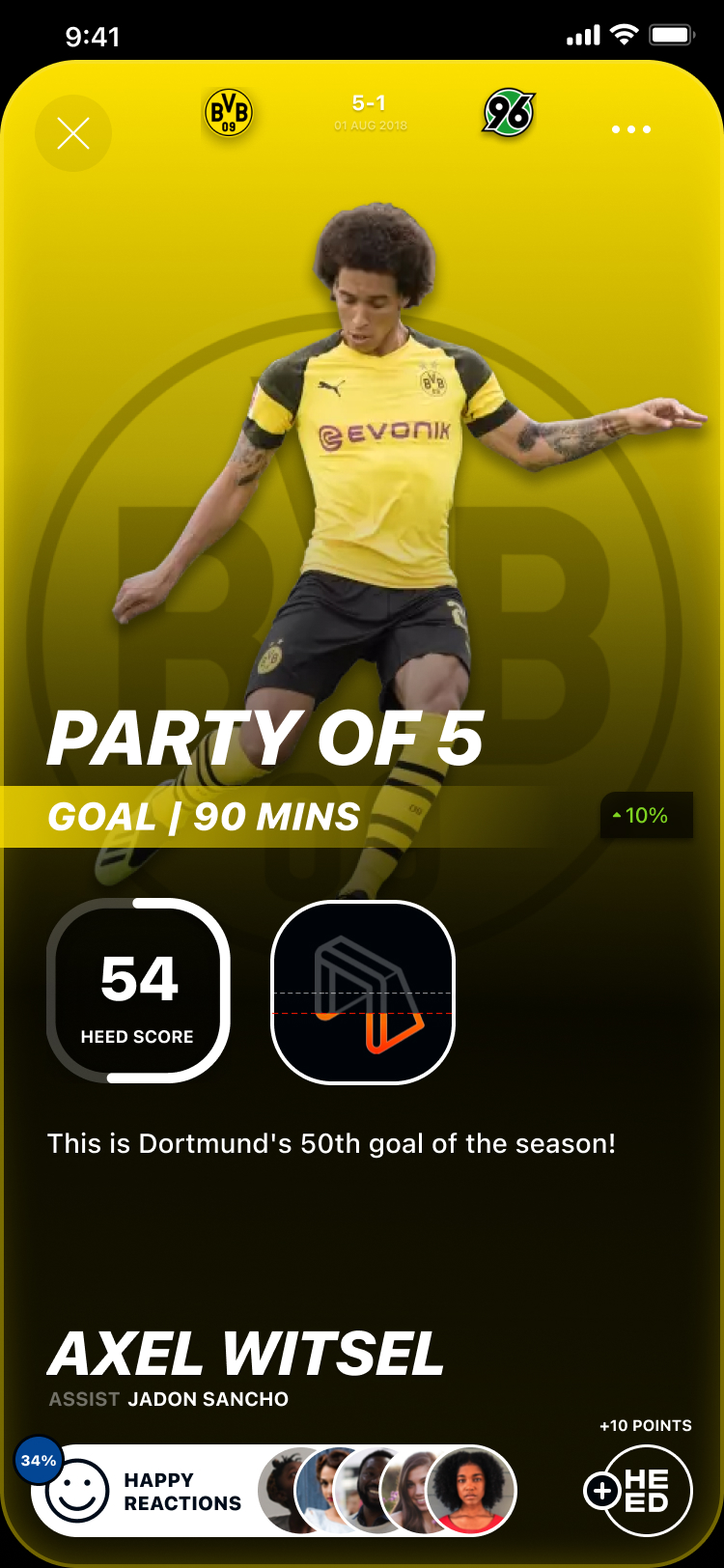
A knockout, a goal, and a ride are different stories. The template had to have a slot for "what just happened" that could be a thunderbolt in the 85th or a flag on a bull, without the card falling apart.
We couldn't custom-illustrate every asset. We also couldn't ship a generic highlight that made Chelsea look like UFC. Content replacement was the job: swap the photography, the palette, the language. Keep the structure.
The front had to read in one glance. The score and analytics had to reward people who wanted more. The back had to be worth keeping. Three users, one object.